How to Stop Nightmares: What the Science Actually Recommends
How to stop nightmares: what causes them, why Imagery Rehearsal Therapy is the best-supported treatment, step-by-step instructions, and when to get help.
Research-backed guides on lucid dreaming, dream recall, and the neuroscience of sleep.

How to stop nightmares: what causes them, why Imagery Rehearsal Therapy is the best-supported treatment, step-by-step instructions, and when to get help.
 Featured
How to start a dream journal that lasts: the 60-second wake-up routine, what to write, paper vs voice vs app, and how to read your entries for patterns.
 Featured
Nine dream journal apps compared on what each is actually built to do: voice capture, whole-journal analysis, lucid tools and export. Including mine, honestly.
Why do you keep having the same dream? Research says recurring dreams are a personal pattern, not a symbol to decode. What they mean and how to stop them.
 Featured
What does your dream really mean? Skip the dream dictionary: research shows dream symbols are personal, not universal. Here is how to decode your own.
 Featured
MILD (Mnemonic Induction of Lucid Dreams) is the most scientifically validated lucid dreaming technique, achieving up to 46% success rates. Learn the complete protocol developed by Stanford researcher Stephen LaBerge.

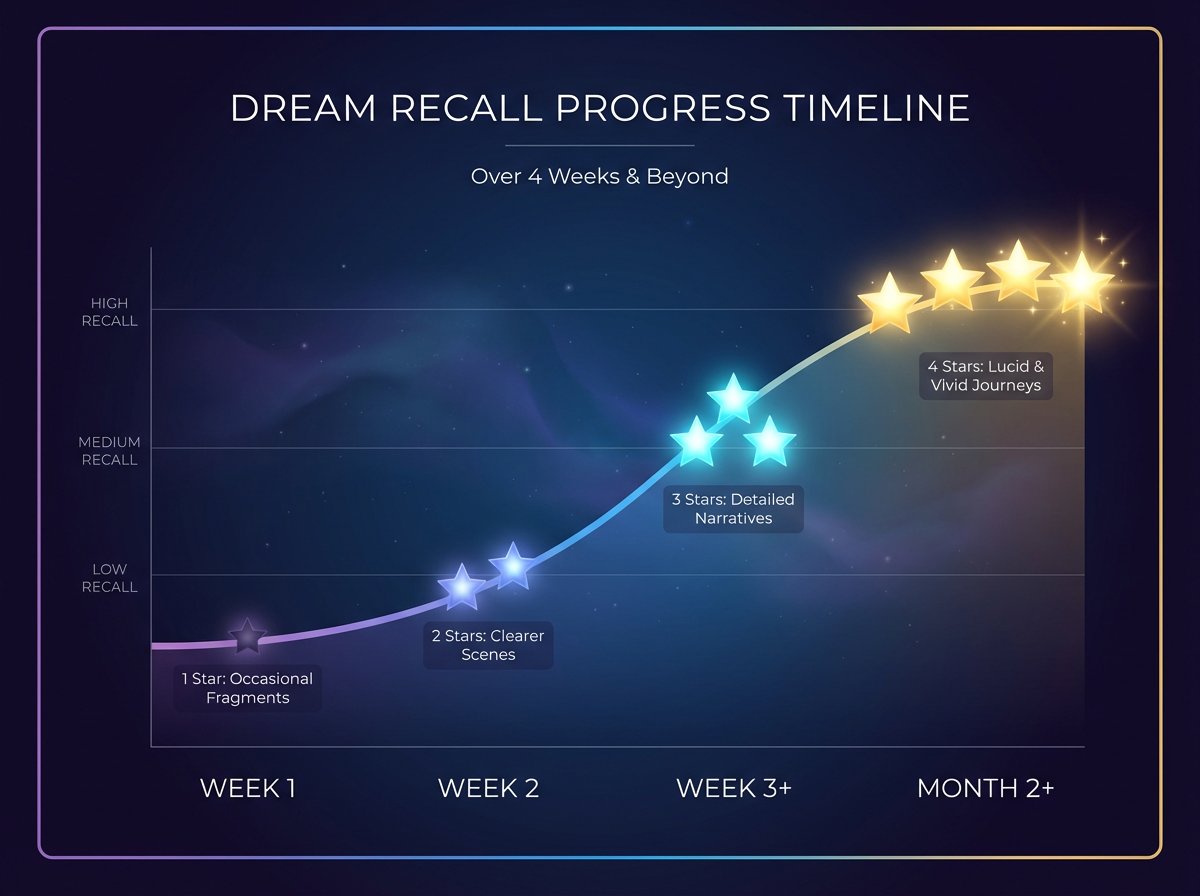
Why some people wake up with vivid dream memories while others draw a blank. Over two decades of neuroimaging research reveals that dream recall depends on measurable brain differences, sleep chemistry, and trainable habits.